Although Obama asserted that “the time for bickering is over,†his speech has done little to quell the contentiousness of the healthcare debate thus far. When he maintained in his address that his plan would not provide free coverage to illegal immigrants, the statement was met by an outburst from Rep. Joe Wilson (R-South Carolina): “You lie!†(Wilson apologized for his eruption and was subsequently reprimanded by the House.) And on Saturday, tens of thousands gathered on Capitol Hill as part of the Tea Party Express rally to protest big government and programs like healthcare reform.
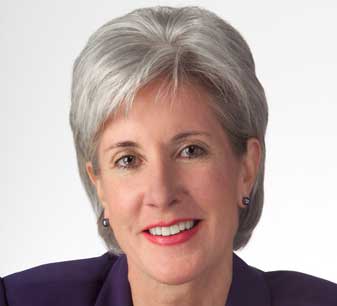
As this political firestorm rages, Health and Human Services Secretary Kathleen Sebelius has been charged as one of the administration officials to carry Obama’s message and marshal forces on the frontlines of healthcare reform. With oversight of 11 agencies and a budget of $879 billion, Sebelius, 61, deals with issues ranging from management of healthcare services across the country to containment of such pandemics as the H1N1 virus, better known as the “Swine Flu.†Her job has gained more urgency with the recent release of the U.S. Census Bureau’s report on income, poverty and health insurance. The survey revealed that the recession has pushed an additional 2.6 million people into poverty — the nation’s poverty rate rose from 12.5% in 2007 to 13.2% in 2008, the highest level in 11 years — and expanded the number of individuals without private health insurance from $45.7 million in 2007 to $46.3 million in 2008. In part one of a two-part interview, Sebelius talked with Black Enterprise Editor-In-Chief Derek T. Dingle about the political battle over healthcare reform.
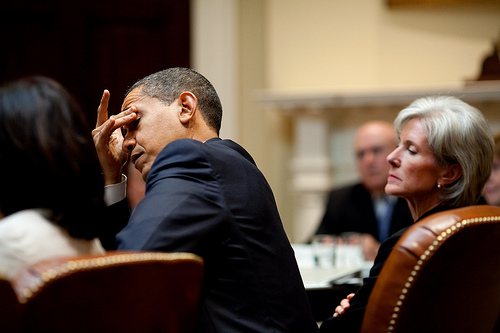
Black Enterprise: In his recent speech, the president said that healthcare reform is a moral imperative. Having made that assertion, what areas of healthcare legislation are open to negotiation and what’s nonnegotiable?
Kathleen Sebelius:
The president said healthcare reform would cost $900 billion over 10 years. There have been some estimates from others that it will cost more than $1 trillion. How do you pay for this program? How do you create efficiencies in the system? How do you get more money from the insurance companies?
Well, about $600 billion has been identified by the president actually in the budget this year that he put forward in sort of a reserve fund that is money we’re currently spending in the system. So two-thirds of that $900 billion is money that’s spent right now and paying for things that don’t really add to the health or well-being of Americans. Cut out [federal] subsidies for private insurers who want to compete with Medicare and currently are being paid more money than the fee for service but aren’t delivering more benefits. Lowering the overall cost of prescription drugs for Medicare beneficiaries to the tune of about $100 billion is part of this. Competitive bidding for durable medical equipment and some of the prescription prices will lower costs. And then the president is open to having a tax on the insurance companies who sell Cadillac plans, plans worth more than $25,000 or $30,000 which again discourages those plans and brings in some revenue.
The administration wants to create a competitive exchange, and one aspect of that proposal is a public health plan. If it would serve as a powerful tool to lower insurers’ rates then why would that be an optional aspect of the plan?
I’m not sure it’s optional in terms of having some competitors to private insurers or some target that they have to meet in terms of keeping costs down. The president has said pretty much from the beginning
Public option, co-op, trigger. Which do you favor?
Well I think the public option is the best idea that I’ve seen to get to those principles. But when the Senate Finance Committee comes out with its specific draft and they have a co-op that’s robust and can provide that kind of competitive option, it may work just as well. But I don’t rely on the private insurance companies to just, on their own, lower costs for Americans.
***
Further Reading
— Obama Outlines Healthcare Goals Before Congress
— How Healthcare Reform Affects You
— Finding Compromise in a Tough Healthcare Reform Debate
Resources
— Senate Finance Committee Proposal
***
In part two, Black Enterprise and Health and Human Services Secretary Kathleen Sebelius discuss how reform would affect small business and healthcare disparities in African American communities.